Shot List Example: How I Planned, Rewrote, and Shot this Film Scene

Updated: Aug 10
As the CEO of ShotKraft, and after more than two decades working as a cinematographer, I'm often asked the same questions. What exactly is a shot list? How detailed should it be? Where do you even begin? Give me a shot list example.
I've answered those questions countless times, but recently it occurred to me that explaining the theory is probably less useful than simply showing the process. A few months ago I shot a short film here in New York, and I'd like to walk you through the evolution of one scene, from the first draft to what eventually appeared in the final cut.
If you've searched for a shot list example, this is about as real as it gets. This is how this scene came together.
The Scene
The film opens inside a hotel room. Scott wakes up after a rough night. As he slowly gets his bearings, his phone buzzes with a message from his father. Something is clearly wrong, and Scott's day takes an unexpected turn.
One actor. One location. Very little dialogue, just a phone call. Which is exactly why the coverage matters. Every angle has to contribute to the emotional rhythm of the scene.
Starting From A Blank Page
Like many independent productions, we weren't able to lock our location until just a few days before shooting. That wasn't ideal, but it also wasn't unusual. The Assistant Director still needed to build a schedule, and I wanted to start thinking about coverage long before we walked into the room.
I'd already uploaded the screenplay into my ShotKraft project, so the scenes had been parsed automatically. All I had to do was open the hotel room scene, click Generate, and wait about a minute for the first draft.
The first version gave me a solid starting point. I deleted a couple of shots that didn't feel necessary, but one suggestion immediately caught my attention—a cutaway to Scott's pill bottle. It's the kind of detail I almost certainly would have included eventually, but it wasn't at the top of my mind that morning. Seeing it in the first draft reminded me that those small visual clues often do as much storytelling as dialogue.
At that point, I was actually more concerned about camera movement. I thought a few moments would benefit from a slow dolly move, so I marked those shots accordingly and made a note to discuss it with the AD and the producer. Whether we could afford the equipment was still an open question, but I wanted the conversation to happen while we were planning, not the night before the shoot.
Below is the first draft alongside the version after my initial review. I've highlighted the changes.


Visualizing the Shots Before the Location Scout
The next step wasn't strictly necessary, but I find it helpful. It is really a new thing that nobody did before, but is now doing it simply because they can. Even without a location, generating reference images makes a shot list much easier to scan. They're not storyboards, and they certainly aren't a prediction of what the finished film will look like. They're simply visual placeholders that help everyone imagine the scene a little more easily. See for yourself.
At first, though, something looked completely wrong. Scott. He didn't resemble the character I had been picturing at all. Looking back, that was hardly surprising. I had never described him in the shot descriptions.
I deleted every image that included Scott, added a short description of his appearance to the first shot where he appeared, and generated those images again. That small change made a remarkable difference. Suddenly, the images across the scene felt consistent and much closer to the movie we were imagining.
Those images came with us to the location scout, fully expecting that many of them would change.


First Impact With the Real World
A few days later we finally locked the hotel room in Queens.
Walking into a real space always changes your thinking. Some ideas immediately become stronger, while others quietly disappear.
During the scout, our director stepped into the room and acted out a shot he had just imagined. I pulled out my phone, opened Artemis Director's Viewfinder, framed it exactly as we would shoot it, and took a photo. I created a new setup in the scene and uploaded the reference image, right there from my phone. This is how that looked on my cellphone screen.

I treat the shot list as a reference and a working document instead of something that gets printed once and forgotten. Every scout, every conversation adds a little more clarity. Below, you can see how the shot list evolved once we had a real location to work with.


The Budget Wins, We Lose the Dolly
Then reality intervened. As the schedule came together and the budget became final, it was clear we couldn't justify bringing in a dolly for this scene. That happens more often than I'd like.
Rather than forcing the original plan, I replaced those moves with subtle handheld shots. It wasn't simply a compromise. The handheld camera actually suited Scott's state of mind. It introduced just enough movement to make the audience feel like they were sharing the room with him, quietly witnessing his confusion as events began to unfold.
Sometimes practical decisions end up improving the storytelling.


The Shoot
By the time cameras rolled, very little needed to be discussed. Everyone already knew the plan. The references had been reviewed. The location-specific changes had already been incorporated into the shot list.
That preparation bought us something every production wants: time. We completed all eight setups for this emotionally demanding opening scene in roughly three hours. We then packed the trucks, moved across town, and still had enough time left in the day to shoot several more scenes at a coffee shop on Manhattan's Upper East Side.
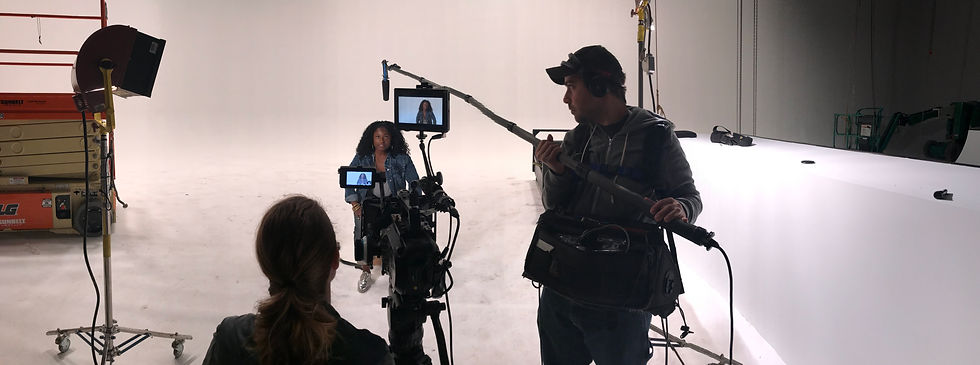
Novice filmmakers think that preparation makes filmmaking less creative. Nonsense. Quite the opposite, actually; it allows the creative conversations to happen earlier, when there's still time to think. Just look at some BTS photos from the day of the shoot, and you will understand immediately why delaying big creative decisions is a bad idea.
The Editor Gets the Last Word
One of the close-ups never made it into the finished film. The story didn't need it ultimately. As the edit tightened, the pacing improved, and that shot quietly disappeared.
That's to be expected.
A shot list isn't a promise that every shot will survive. It's a roadmap, and like any roadmap, it changes as the journey unfolds.
Below is the final version of the shot list as it appears in the finished film.

Looking Back
What strikes me most is how the shotlist evolved naturally. We started without a location. We refined the coverage after the scout. We changed the camera movement because of the budget. The editor made one final pass and removed a shot we thought we needed.
None of those changes meant the original shot list had failed. Just the opposite. Because we had a thoughtful first draft, every revision was deliberate rather than reactive.
People sometimes think of a shot list as a finished document—a checklist you print before the first day of production. In my experience, it's much closer to a conversation.
Every stage of production teaches you something new, and a good shot list should reflect that.
Hopefully, this behind-the-scenes look at one scene gives you a better sense of how a professional shot list evolves, and why no two versions are ever the same.



Comments